
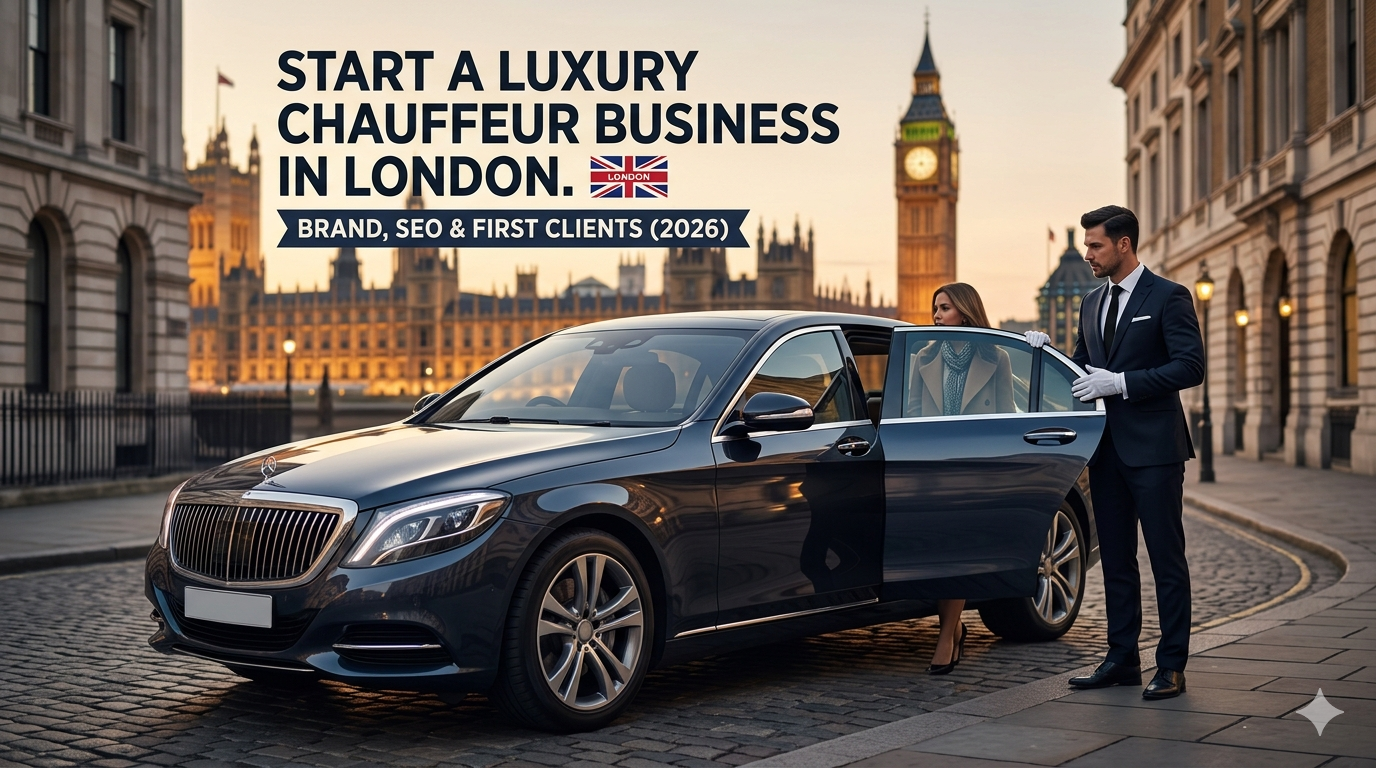
 London is one of the most lucrative markets in the world for luxury ground transportation. On any given evening, Rolls Royces are gliding past Mayfair hotels, Range Rovers are collecting hedge fund managers from City offices, and Maybachs are queuing outside Heathrow Terminal 5. The demand is real, the money is serious, and the market is far from saturated at the premium end.
But here is the truth that most people miss — getting the cars is the easy part. The hard part is building a brand that attracts high-net-worth clients who actually trust you with their time, their privacy, and their £500-per-hour booking. This guide breaks down exactly how to launch a luxury chauffeur business in London that stands out from day one, from brand identity to your first Google booking.
Step 1: Understand What You Are Actually Selling
First, get clear on this: you are not selling transport. Anyone with a car and a licence can sell transport. You are selling certainty. You are selling the feeling that when a CEO steps out of a board meeting, their car is already there. When a family arrives from a 14-hour flight at Heathrow, their luggage is handled before they even ask. When a client has a confidential conversation in the back seat, they know their driver has signed an NDA.
Luxury is the elimination of friction and the guarantee of discretion. Every decision you make — from the car you buy to the font on your invoice — should communicate those two things.
This clarity matters because it shapes your entire brand. A general minicab company competes on price. A luxury chauffeur brand competes on trust and experience. These are completely different businesses with completely different customers.
Step 2: Choose a Brand Name That Commands Respect
Your business name is your first filter. High-net-worth clients make unconscious judgements in milliseconds. A name like “London Star Cars” sounds like a minicab company. A name like “Belgrave Executive Travel” or “LDNLUX” immediately signals a different tier.
The naming principles for luxury transport businesses are specific:
- Short and memorable — two syllables is ideal, three is the maximum
- Geographic anchor — London, Mayfair, Chelsea, Belgravia all carry weight
- Abstract elegance — avoid generic descriptors like “premium” or “luxury” in the name itself; show it, don’t say it
- No hyphens, no numbers — these look amateur on vehicle branding and business cards
When brainstorming, it helps to use an AI name generator to produce variations fast. You might spend three days agonising over names only to have a tool generate the perfect combination in seconds. Feed it prompts like “London + elegance + trust” or “executive + discreet + travel” and see what emerges. Refine from there rather than starting from a blank page.
Once you have a shortlist of three to five names, your next step is critical: check how many businesses already use similar names. The luxury market is unforgiving about copycats. A name that is too close to an established competitor signals either laziness or ignorance — neither of which is a great first impression for a £100,000-a-year contract. A similar business name checker can show you the competitive landscape for each name on your list before you commit to anything.
Step 3: Build a Website That Does the Selling
Your website is your most powerful sales tool and most chauffeur companies get it completely wrong. They use stock images, generic copy, and a contact form that looks like it was built in 2012. Here is what a luxury chauffeur website actually needs:
Hero Section: One stunning, full-screen image of your actual vehicle — not stock photography. Clients can spot stock immediately. Real photographs of your real car, professionally shot, communicate authenticity. This is non-negotiable.
Fleet Showcase: High-resolution images of every vehicle with interior shots. List specifications that matter to your clients — rear legroom, entertainment system, WiFi availability, child seat options.
Social Proof: Real, named Google reviews. When someone is spending £600 on an airport transfer, they read reviews differently than they do for a £20 restaurant. One detailed review from a named, verified client is worth twenty anonymous five-stars.
Booking Flow: Make it simple. Name, pickup location, destination, date and time, vehicle preference. Collect enough information to quote accurately, but do not make them fill out a form that feels like a visa application.
Contact Options: WhatsApp is essential in the London luxury market. Many HNWI clients — particularly those from the Middle East, Asia, and Africa — prefer WhatsApp for all business communication. If you do not have it, you are invisible to a significant segment.
For SEO, your website needs a sitemap submitted to Google from day one. Most new business owners skip this step and then wonder why their site does not appear in search results for months. Use a sitemap generator tool to create and submit your XML sitemap immediately after launch. Google needs a roadmap to your content — give it one.
Step 4: Research Your Competition Without Poisoning Your Inbox
Before you finalise your pricing, service tiers, and positioning, you need to understand what the established players are doing. Sign up for competitor quote forms, book a test ride with one or two of them, and subscribe to their email newsletters to track their promotions.
The problem is that the moment you start submitting your real email to competitor booking portals, you will be added to their CRM and hit with follow-up sequences for months. It sounds trivial, but when you are running a business launch and trying to keep your inbox operational, this becomes genuinely disruptive. Using a disposable email address for competitive research sign-ups keeps your primary inbox clean while giving you full access to the information you need. Delete the temporary inbox when you are done — no follow-up sales sequences, no clutter.
Step 5: Price for the Client You Want, Not the One You Can Afford to Lose
A common mistake new luxury operators make is pricing low to “build a client base” first. This is the wrong strategy. Low pricing in the luxury segment does not attract clients — it repels them. A high-net-worth individual who pays £600 for an airport transfer is not choosing you because you are cheap. They are choosing you because the price signals that you will show up on time, in the right car, dressed properly, with a name board, and that you will not call them four times asking for directions.
Price at the market rate for your vehicle class from day one. Use your first ten bookings to build reviews and testimonials. Those reviews become your real price justification.
For reference, standard London luxury chauffeur rates in 2025:
- Heathrow to Central London: £120–£200 depending on vehicle
- Hourly rate (Mercedes S-Class): £85–£120
- Full-day hire (8 hours): £650–£1,200
- Rolls Royce / Maybach tier: 2–3x the above
Step 6: Your First Clients Come From Trust Networks, Not Google
In the early months, SEO and paid ads will generate little. Your first clients will come from warm introductions. Here is where to focus:
Concierge desks at 5-star hotels — Claridge’s, The Dorchester, The Ritz, Four Seasons. Build a personal relationship with the head concierge at two or three of these. Bring your business card and a small, thoughtful gift. They refer dozens of clients per week and will send guests your way if they trust you personally.
Wedding planners — London has a booming luxury wedding market with an enormous Indian, Nigerian, and Middle Eastern client base. A single wedding can generate five to eight bookings. One great experience leads to a referral the following week.
Corporate travel managers — Target mid-size law firms, private equity boutiques, and management consultancies. Many of them have a monthly transport budget and no preferred vendor. A professional pitch deck and one flawless corporate account can anchor your revenue for years.
The Long Game
Starting a luxury chauffeur business in London is not difficult if you respect what the market is actually asking for: reliability, discretion, and a brand that communicates both before the client even makes the booking. Get your name right, build a proper website with the SEO fundamentals in place from day one, and price yourself as the premium operator you intend to be.
The cars are the easy part. Build the brand first.